
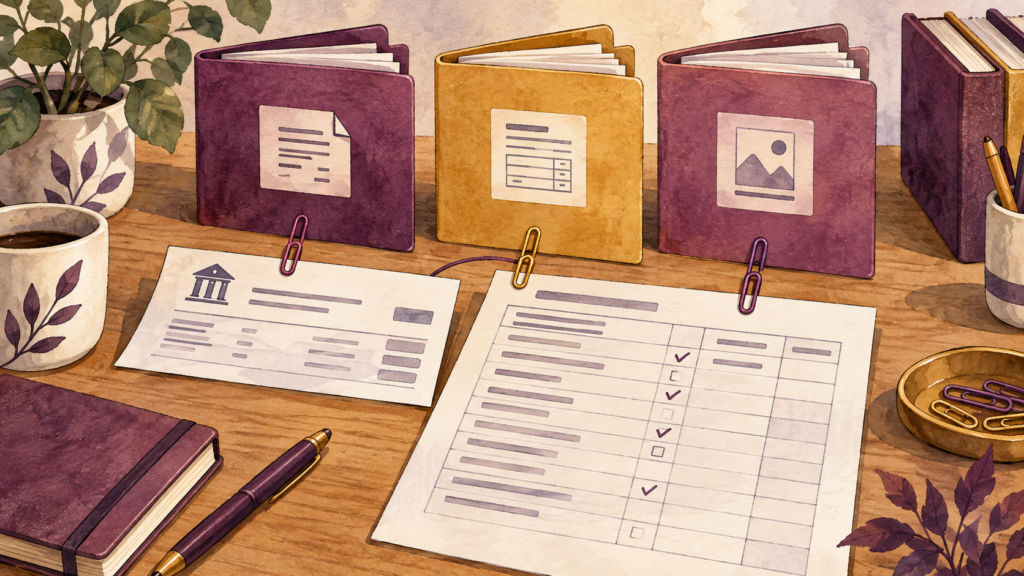
A bank deposit tells you money arrived. It does not, by itself, explain the transaction or how it belongs in your books. Keep the supporting record so your bookkeeper can distinguish customer activity from transfers, funding, and other sources of money.
The IRS recordkeeping guidance for businesses explains why records should support income, expenses, and transactions. Your bookkeeping process should connect the bank entry to those supporting documents instead of relying only on the bank-feed description.
Give each unclear deposit a short record
Save the date, amount, payer or originating account, and the document explaining the transaction. That might be an invoice, transfer confirmation, funding agreement, or payment-provider statement. Describe what you know and mark unresolved questions for the person maintaining the books.
Avoid deciding tax treatment simply from a transfer label. The underlying facts and your professional adviser’s review determine the appropriate treatment.
When a payment processor sends one combined payout
A payout can require more than a single sales receipt to explain. Keep the provider’s payout report alongside the bank transaction and organize a reconciliation worksheet with these fields:
- Payout identifier and the period covered.
- Gross transactions shown in the provider’s report.
- Separately identified fees, refunds, adjustments, or other report items.
- Net payout and the bank amount received.
- Difference, if any, and the question still to resolve.
Use the labels and amounts from the actual report. Do not force a difference into an invented expense or record the same activity again simply to make a worksheet balance. Ask your bookkeeper how this report should connect to the records already imported into your accounting system.
Make the handoff repeatable
Use a folder name that includes the period and provider, and keep original files intact. Share financial records through the secure method agreed with your bookkeeper. A short unresolved-items list helps separate missing evidence from transactions that have already been reviewed.
Source checked September 24, 2026. This is a document-organizing guide, not individualized accounting or tax advice.
Related reading: Before Switching Bookkeeping Software, Build a Records Handoff Folder.